


 Main Menu
Twenty years ago, we started with a simple idea: recording your screen shouldn’t be complicated.
A lot has changed since then, including our name.
But as we celebrate ScreenPal’s 20th anniversary, the most interesting story isn’t everything we’ve built over the past two decades.
It’s everything you’ve built with it.
Lessons and lectures. Tutorials and training programs. Feedback for students. Presentations for colleagues. Product demonstrations. Online courses. Quick explanations that saved someone an email, or a meeting. Videos that helped people learn something new, solve a problem, or feel a little more connected to someone on the other side of a screen.
For twenty years, you’ve invited us into your classrooms, workplaces, homes, and communities.
And along the way, you’ve helped shape what ScreenPal has become.
It started with a simple screen recorder
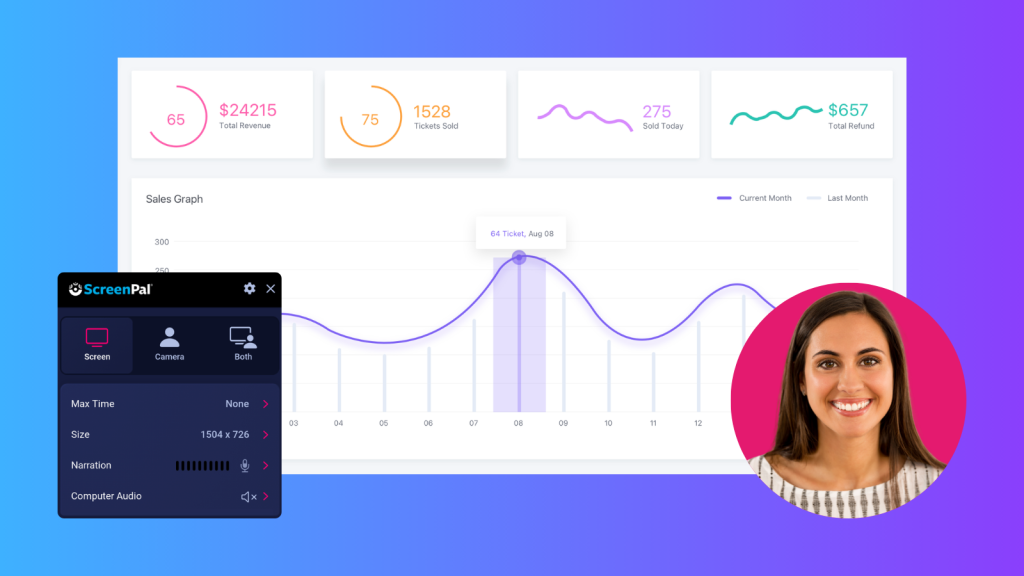
In 2006, Screencast-O-Matic began as a straightforward way to record and share what was happening on your screen.
There were no complicated production workflows. No expensive equipment required. Just an easier way to capture something on your screen and share it with someone else.
That simplicity mattered.
Teachers could demonstrate something instead of trying to explain it in an email. Trainers could walk someone through a process. Teams could communicate ideas visually. Anyone with something to share could hit record.
Over time, the ways people used video changed, and so did the things they needed from us.
What started with screen recording grew into something much bigger. But one idea has stayed remarkably consistent: Video creation should be simple enough for anyone to use.
Look what you’ve created in twenty years
Twenty years is a long time in technology.
Entire platforms have appeared and disappeared. The way we work has changed. The way we teach has changed. And video has gone from something that often required specialized equipment and expertise to an everyday way of communicating and learning.
Through all of that change, we’ve had the privilege of helping people find new ways to use ScreenPal.
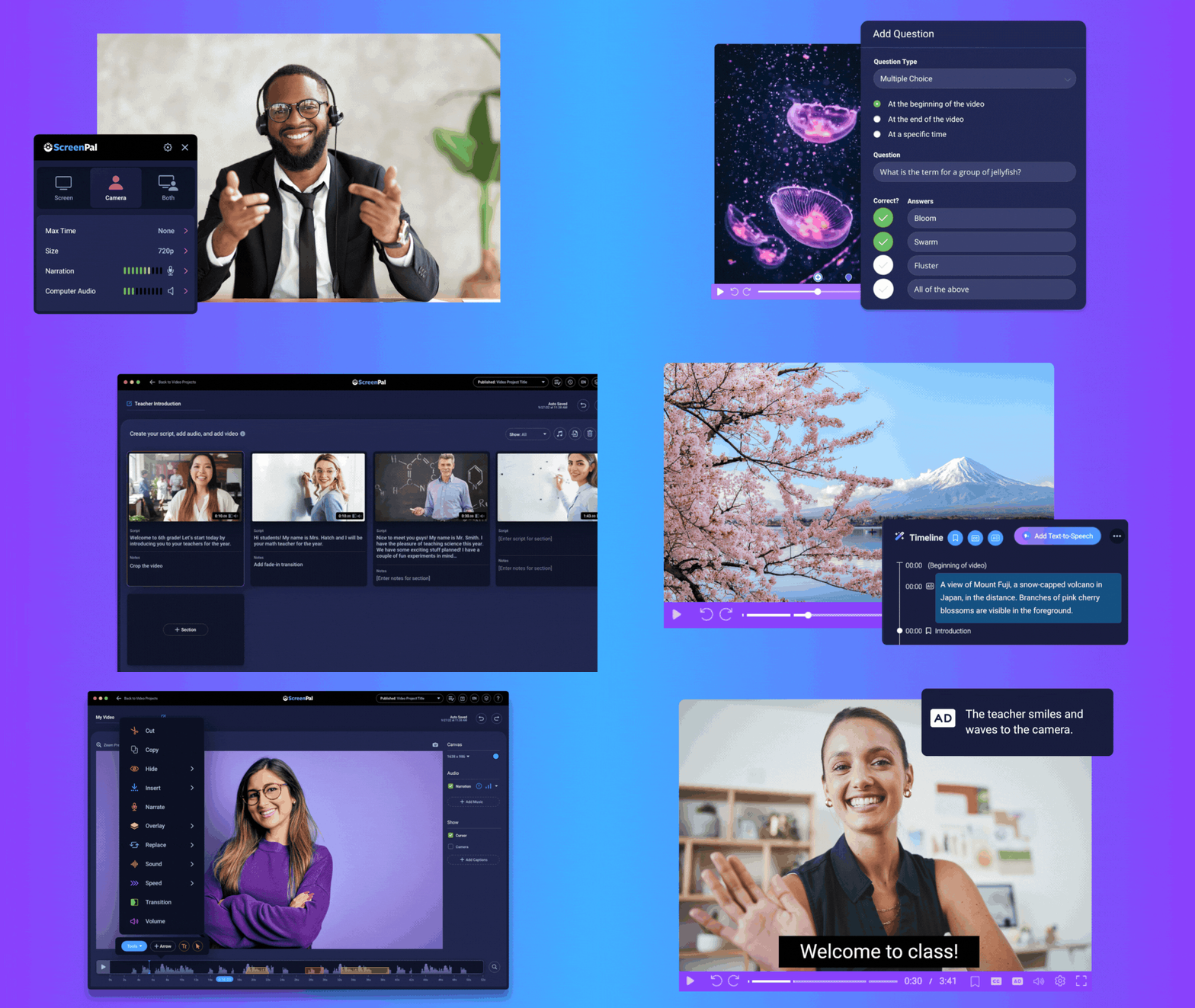
- Teachers flipped their classrooms, created instructional videos, and gave students more personalized feedback.
- Faculty recorded lectures and built online learning experiences that reach students wherever they are.
- Students became creators themselves, using video to demonstrate what they know instead of simply consuming content.
- Instructional designers transformed existing materials into engaging digital learning experiences.
- Trainers and L&D teams created onboarding programs, software tutorials, microlearning, and resources employees can revisit whenever they need them.
- Teams used video to explain ideas, demonstrate processes, communicate asynchronously, and share knowledge across offices and time zones.
- Creators built courses, tutorials, presentations, and content for audiences around the world.
- Mentors and mentees used video to create two-way mentorship, sharing feedback, experiences, and expertise while giving both sides opportunities to teach, learn, and grow.
- And sometimes, you simply needed to show someone what you mean. That counts, too.
Behind every recording is a person trying to communicate something to another person. That has always been the part of video that matters most to us.
We’ve grown because you’ve asked us to
ScreenPal today looks very different from Screencast-O-Matic in 2006.
That evolution didn’t happen simply because technology changed. It happened because the people using ScreenPal kept showing us what they needed next.
You recorded. You asked us to help you edit.
So a simple recording tool grew into a video editor that could help you refine your message, remove mistakes, add visuals, and turn a rough recording into something ready to share.
You created more videos. You needed somewhere to put them.
Recording and editing expanded into hosting, content management, channels, sharing, and integrations with the platforms where you already work and teach.
You taught with video. You wanted learners to do more than watch.
Video became interactive, with quizzes, polls, ratings, calls to action, annotation buttons and other ways to turn passive viewing into active participation.
You wanted to know whether people understood.
Assessment and analytics made it possible to see more than whether someone clicked play.
You needed your content to reach more people.
Accessibility became an increasingly important part of the creation process, with tools for automating the creation of video captions, transcripts, translation, audio descriptions, and other ways to help make video more inclusive.
And you told us that creating great videos takes longer than you’d like.
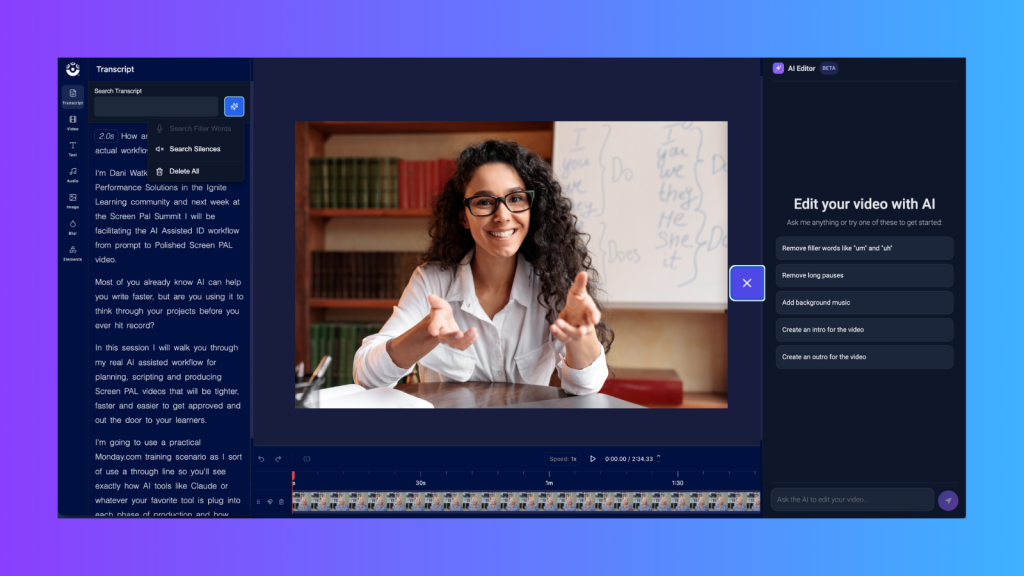
Today, AI is helping take some of that repetitive work off your plate. ScreenPal can generate captions, audio descriptions, and translations, help create and organize content, and now, with our AI chat video editor, you can simply describe the edits you want to make.
We’re using AI to make video creation faster and easier, while keeping you in control of the story you want to tell.
The ScreenPal of today can do far more than the Screencast-O-Matic of 2006. But all of those capabilities share the same purpose they always have: to make it easier for you to share what you know.
Some things haven’t changed
Twenty years of growth inevitably brings change.
We’ve changed our name. Our logo has changed. Our interface has certainly changed. And the list of things you can do with ScreenPal today would probably surprise someone opening Screencast-O-Matic for the first time in 2006.
But longevity means more to us than simply being around for 20 years. It means earning the opportunity to keep showing up.
It means listening when educators, trainers, businesses, creators, and institutions tell us what they need.
It means continuing to make sophisticated video tools approachable for people who don’t consider themselves professional video creators.
And it means remembering that technology is only useful when it helps someone accomplish something meaningful.
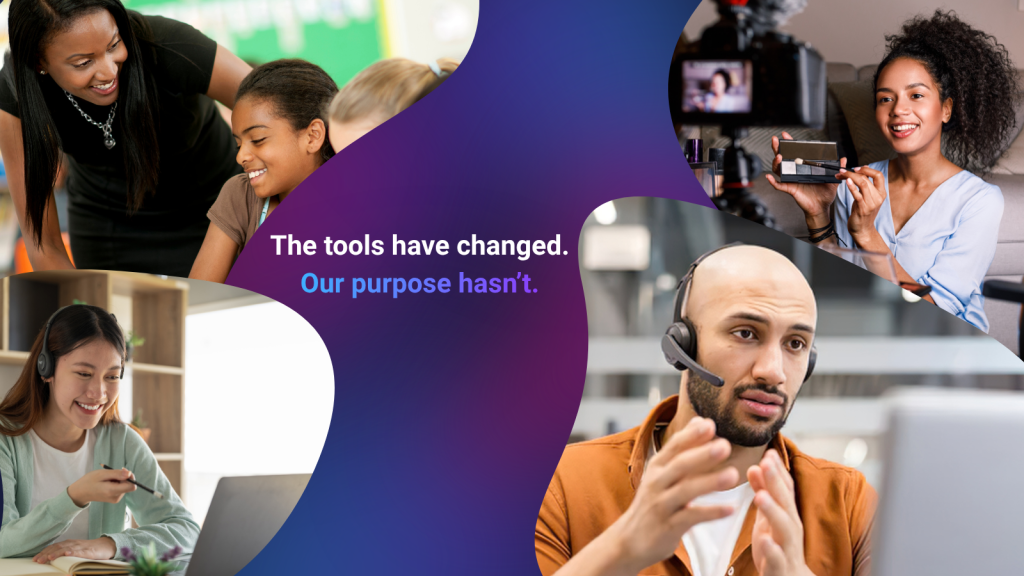
The technology has evolved, but our purpose hasn’t.
Your ScreenPal story is our story
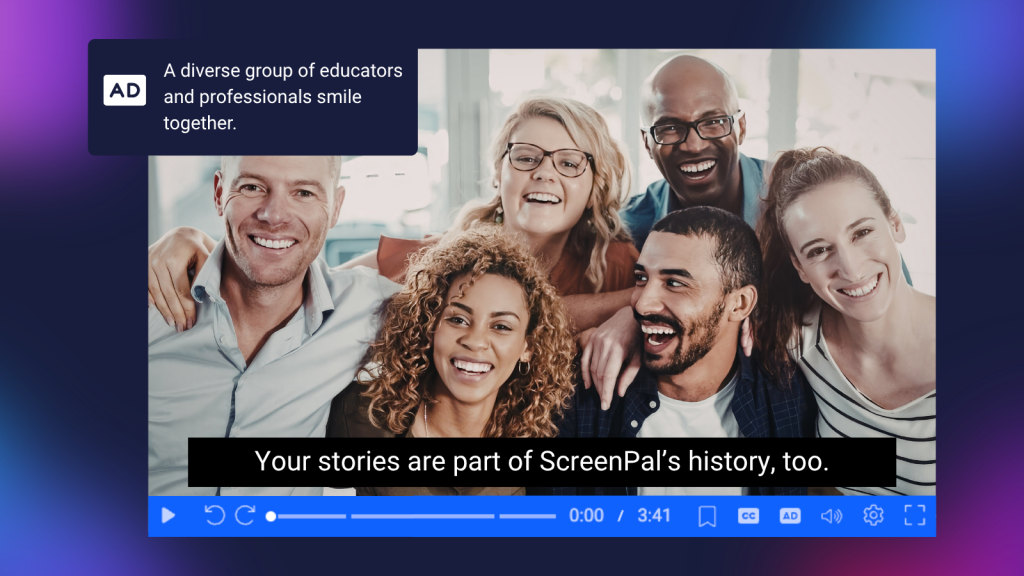
An anniversary naturally makes you look backward.
But when we look back at twenty years of ScreenPal, we don’t just see product releases and company milestones. We see people.
Some of you discovered us when we were still Screencast-O-Matic. Some have been using our tools for more than a decade. Others joined the ScreenPal community this year.
You’ve recommended us to colleagues, and brought us into new schools and organizations. You’ve sent us feedback, requested features, and asked questions. You’ve told us when something could be better, and found uses for our tools that we never could have predicted when this journey started.
Some of you have even grown professionally alongside us; moving from classrooms to leadership roles, building new training programs, changing organizations, or discovering entirely new ways to teach and communicate.
Those stories are part of ScreenPal’s history, too.
“ScreenPal has become an essential part of how I create content. I use it to edit our social media videos, removing filler words and silences is one of my biggest time-savers, and I build all of my online courses with it. I’m especially a huge fan of the storyboard feature because it makes planning, recording, and creating course content so much easier.”- Destiny Wagner
“I’ve been using ScreenPal since it was Screencast-O-Matic, which in tech years makes us practically family. It started as my go-to screen recorder and has grown into a whole toolkit I rely on, both for the educators I present to and support and for my own work. Happy 20th, ScreenPal. Here’s to the next 20.”- Leslie Fisher
And we’d love to hear more of them.
When did you first start using ScreenPal? What were you creating then? And what are you creating today?
Here’s to what we build together next
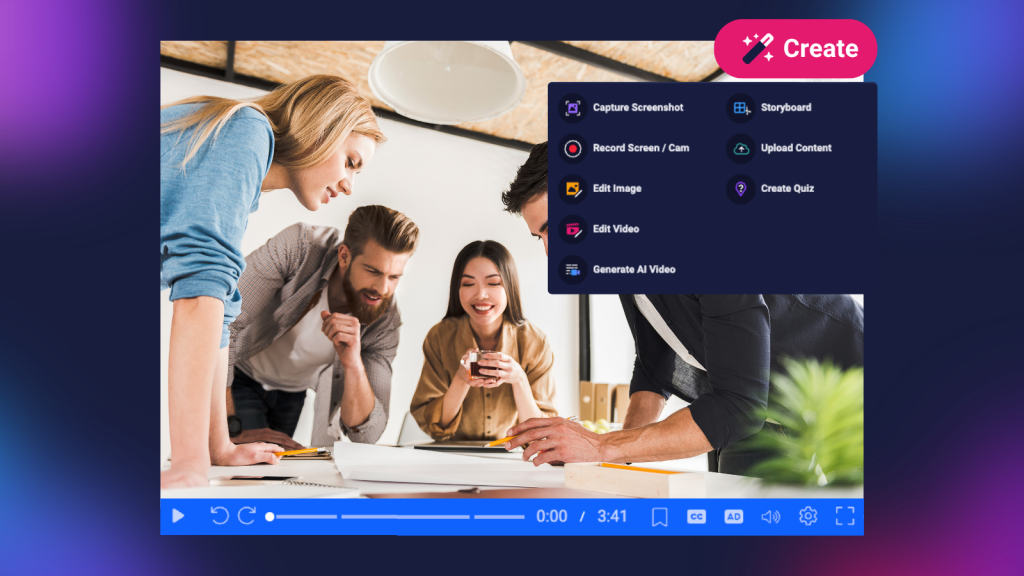
Twenty years gives us plenty to celebrate. It also gives us plenty to look forward to.
AI, interactivity, personalization, accessibility, and new forms of video are changing what it means to create and learn through video. We’re excited about those possibilities, but we also believe the future of video should remain focused on the same thing that has mattered from the beginning: people connecting with people.
ScreenPal CEO Matt Champagne recently explored that future during his keynote at the ScreenPal Innovative Learning Summit, including how AI and interactive video can move learning beyond simply watching content toward more responsive, human learning experiences.
Explore AI, video, and the future of learning →
As we head into our next chapter, we’ll keep listening, learning, experimenting, and building alongside you.
Because ScreenPal’s 20th anniversary isn’t just a celebration of how long we’ve been here.
It’s a celebration of what you’ve made possible while we’ve been here.
Whether you joined us 20 years ago, 20 days ago, or somewhere in between: thank you.
You are part of the ScreenPal story.
Here’s to the next 20 years.


